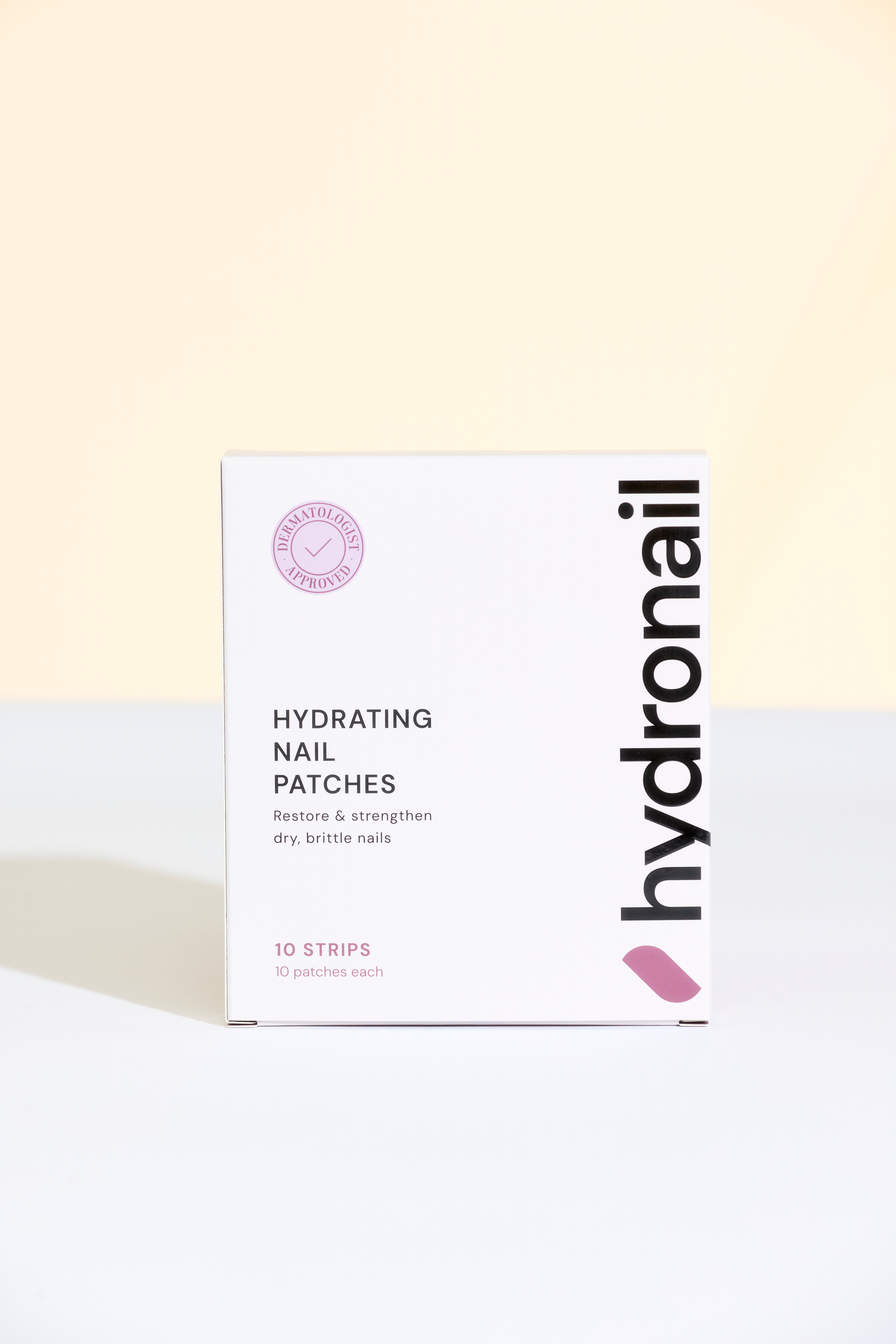


Hydrating Nail Patches for Brittle Nails
Hydrating nail patches function as a protective barrier that helps reduce moisture and protect the nail surface from daily environmental stressors. This consistent, occlusive support promotes improved nail flexibility and resilience by maintaining hydration levels that are essential for your nail structure.
By combining physical protection with targeted hydration, nail patches offer a practical alternative to short-term cosmetic solutions. Regular use may support gradual improvements in nail strength and surface smoothness, helping reduce snagging and breakage over time.
What Exactly Are Nail Patches? (And Why They’re Not Just Stickers)
Nail patches are sometimes perceived as cosmetic accessories, but they are designed as targeted interventions to support nail health. Well-formulated nail patches aim to strengthen weak and brittle nails rather than conceal existing damage.
Hydrating nail patches, such as HydroNail, use a hydrogel-based material to provide functional, non-cosmetic care. The hydrogel forms an occlusive barrier that helps reduce moisture loss while gradually delivering hydration to the nail surface, an area particularly prone to dehydration and structural stress.
Compared to topical creams or oils, which can evaporate or be easily removed, hydrogel nail patches provide sustained contact with the nail. Their flexible design allows close adherence to the nail and surrounding skin, supporting even hydration and prolonged moisture retention without interfering with normal nail function.
How Do Nail Patches Protect and Strengthen Nails?
Nail patches are designed to provide both mechanical protection and structural support for weak or damaged nails. With regular use, they can help reduce further damage and support healthier nail growth through several simple mechanisms:
- Physical protection: Nail patches form a thin, flexible layer over the nail surface that helps reduce exposure to everyday mechanical stress, such as typing, household tasks, and minor impacts that can contribute to splitting or breakage.
- Stabilization of weakened areas: By covering cracks, peeling edges, or thin sections of the nail, patches help stabilize the nail plate and limit further tearing as the nail continues to grow.
- Moisture retention and barrier support: Many nail patches help maintain hydration by reducing moisture loss and protecting the nail from repeated water exposure and harsh chemicals.
- Support for normal nail growth: Some formulations include supportive components such as keratin or biotin, which may help reinforce nail structure over time when used as part of a consistent nail care routine.
The Difference Between Nail Patches and Nail Hardeners
Nail patches and nail hardeners are both used to support nail health, but they function through different mechanisms and address different nail concerns. Understanding how each approach works can help guide appropriate nail care choices.
What Are Nail Patches?
Nail patches are thin, adhesive treatments applied directly to the surface of the nail. They are designed to provide external support by protecting and reinforcing compromised areas of the nail plate.
Here are the key characteristics of nail patches:
- Immediate mechanical support for nails that are cracked, peeling, or fragile
- A protective barrier that helps reduce moisture loss and limit environmental damage
- Formulations that may include conditioning components such as keratin, biotin, or hydrogel
What Are Nail Hardeners?
Nail hardeners are liquid products, typically applied like a clear polish, that aim to increase nail firmness over time. They work by altering the nail plate’s surface properties to improve resistance to bending and breakage.
Here are the key characteristics of nail hardeners:
- Gradual improvement in nail strength and rigidity with continued use
- Reduced susceptibility to splitting, tearing, and mechanical stress
- Formulations that often contain strengthening agents such as calcium salts, proteins, or synthetic polymers
- Simple application as part of a regular nail care routine
Nail Patches vs. Nail Hardeners: Side-by-Side Comparison
|
Feature |
Nail Patches |
Nail Hardeners |
|
Primary purpose |
Gradual strengthening of the nail plate |
External protection and structural support
|
|
Onset of effect |
Progressive improvement with continued use |
Immediate mechanical support |
|
Method of application |
An adhesive patch is applied directly to the nail |
Brush-on liquid, similar to clear nail polish |
|
Best suited for |
Dry, brittle, cracked, or peeling nails |
Soft, flexible, or easily bending nails |
|
Duration of benefit |
Instant protection and reinforcement exactly where nails need it most |
Gradual improvement with consistent, long-term use |
Key Nutrients That Support Brittle Nail Repair
Vitamin-infused nail patches are designed to deliver targeted ingredients directly to the nail surface, where structural weakness and dehydration commonly occur. When formulated appropriately, these patches may support nail repair and gradual strengthening by addressing both protein integrity and moisture balance.
- Keratin: Keratin is the primary structural protein of the nail plate. It can help reinforce weakened areas of the nail surface, improve smoothness, and support resistance to splitting or peeling in nails that are structurally compromised.
- Biotin: Biotin plays a role in keratin production and has been associated with improvements in nail thickness and durability when deficiencies are present. Biotin is often included to support nail resilience as part of a consistent care routine.
- Vitamin E: Vitamin E functions as a conditioning and protective agent. It supports moisture retention and helps protect the nail surface from environmental stressors, which may reduce dryness, surface cracking, and peeling.
When used together, these ingredients address common contributors to brittle nails by supporting nail structure and maintaining hydration. This combined approach may help improve nail appearance and strength over time when incorporated into regular nail care.
How to Use HydroNail Patches
- Prepare the nails: Ensure the nails are clean, dry, and free of polish, oils, or topical products to allow proper adhesion and contact with the nail surface.
- Apply the patch: Remove the patch from its backing and place it directly over the nail, aligning it carefully near the cuticle without overlapping the surrounding skin.
- Allow adequate wear time: Press gently to secure the patch and leave it in place for at least six hours. Overnight use is preferred to support sustained hydration during periods of minimal hand activity.
- Remove and cleanse: Gently peel off the patch and wash your hands to remove any residual material.
Your Action Plan for Stronger, Break-Resistant Nails
Nail splitting and snagging are common concerns and are often linked to structural weakness and inadequate protection. Targeted interventions, such as nail patches, are designed to address these issues by providing both physical support and controlled delivery of conditioning ingredients to the nail surface.
By combining external protection with sustained hydration and reinforcement, nail patches like HydroNail may help reduce ongoing mechanical damage and support gradual improvements in nail strength. This approach emphasizes consistent care rather than short-term cosmetic fixes, supporting healthier nail growth over time.
Read more

Learn how to help brittle nails with effective treatments, causes, and care tips to strengthen, protect, and support healthier nail growth.
Revive dry, brittle nails with simple care tips and hydration treatments. Learn how to strengthen nails using the hydrate-and-moisturize method.